The Biopolis Dresden Imaging Platform constitutes a multi-institutional network of core imaging facilities and provides open access to state-of-the-art microscopy systems as well as image analysis. It offers a comprehensive range of imaging technologies coupled with the profound expertise of BioDIP staff to more than 500 users per year. The BioDIP is currently supported by the German Research Foundation (DFG).
About us
Coordination BioDIP
Cooordination of the BioDIP is performed by a chair and and co-chair. Their responsibility changes every year based on an election of a new co-chair. A co-chair supports the chair for one year and becomes chair in the subsequent year.
This is the latest history of BioDIP chairs:
| 2026: 2025: 2024: 2023: 2022: 2020 & 2021: | Silke Tulok Cornelia Wetzker Johannes Soltwedel Thomas Kurth Ruth Hans Hella Hartmann |
|---|
 © Stephan Wiegand - TU Dresden
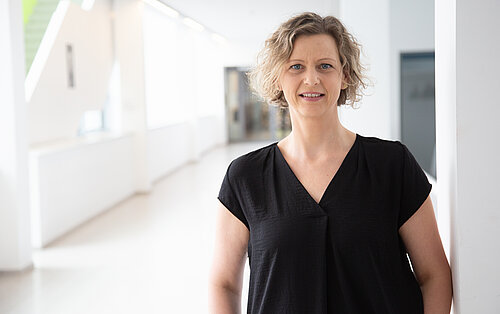
Silke Tulok
BioDIP Chair
Imaging Specialist
CFCI, Faculty of Medicine, TU Dresden
 © CMCB
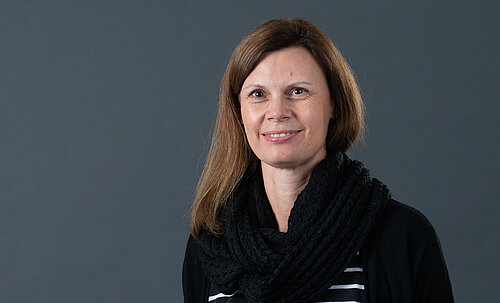
Ruth Hans
BioDIP Co-chair
Imaging Specialist
CMCB, TU Dresden
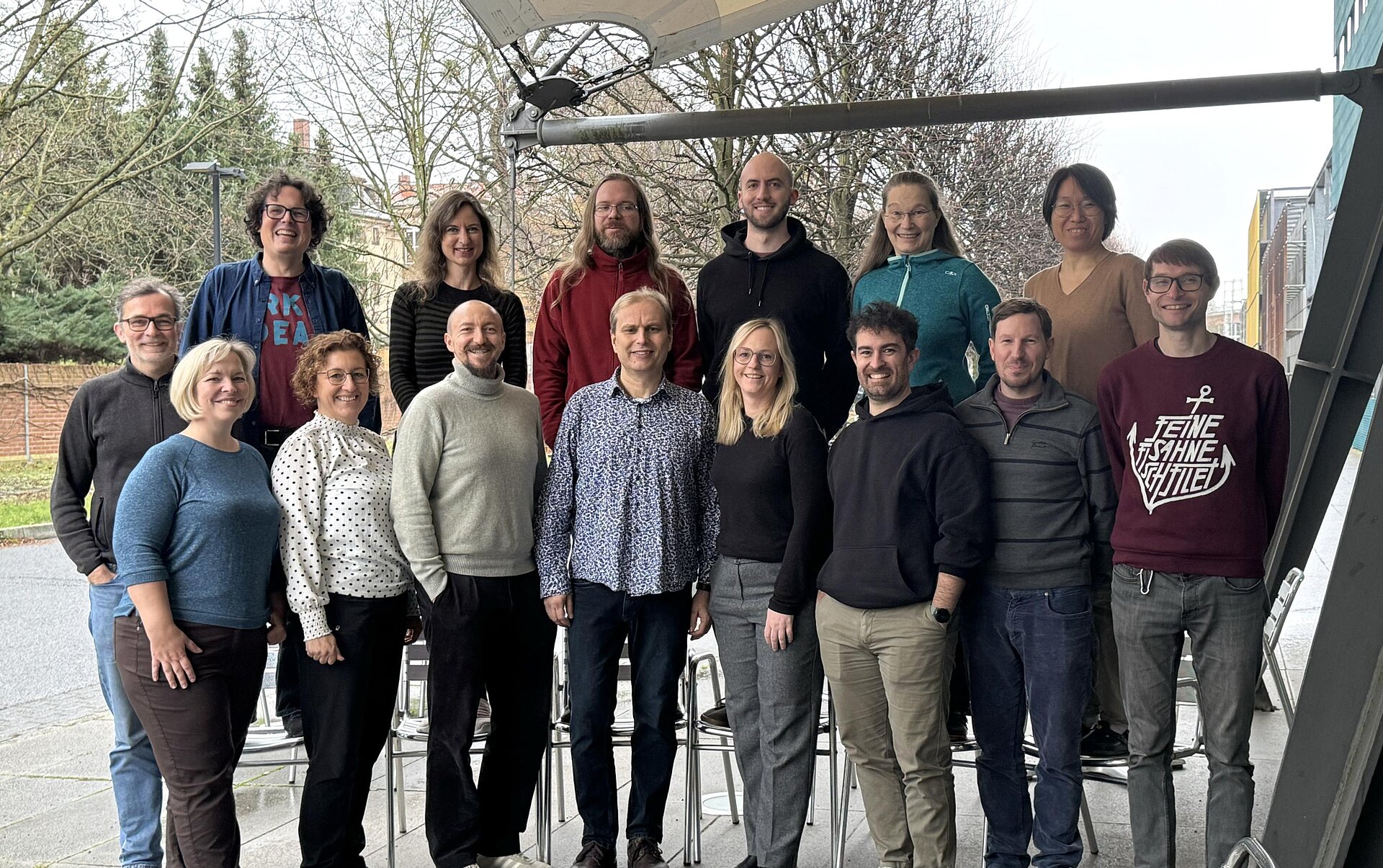
Our Team
We are a team of highly motivated and experienced professionals. We all come from very different backgrounds but essentially we are all true friends of microscopy – in fact, some of us believe that.
“Inner happiness can only be found at the back focal plane of the objective” (Jeremy Sanderson).
 © BioDIP
BioDIP Network
The BioDIP network currently consists of 11 facilities belonging to 5 different research institutions that in turn belong to three different research organizations. All of the research institutions are member of DRESDEN-concept, the excellence research alliance of the TU Dresden together with strong partners of research and culture.
Biopolis Dresden Imaging Platform
Center for Regenerative Therapies Dresden, DFG Research Center and Cluster of Excellence at the TU Dresden
The Center for Regenerative Therapies Dresden (CRTD) at the TU Dresden was founded 2006 as a research center of the German Research Association (DFG). Goal of the CRTD is to explore the capacity for regeneration of the human body and to develop novel regenerative therapies for so far incurable diseases.
Medical Theoretical Center
The Medical Theoretical Center is part of the medical faculty Carl Gustav Carus of the TU Dresden. It is host to several clinical institutes and offers lab space to dedicated research projects.
Max Planck Institute of Molecular Cell Biology and Genetics
The MPI-CBG was founded in 1998. Researchers at the MPI-CBG perform basic research to discover how cell division and cell differentiation work, which structures can be found in cell organelles and how cells exchange information and materials.
German Center for Neurodegenerative Diseases Dresden
The DZNE was founded in 2009 with the Dresden site being established in 2010. The aim of the research performed in Dresden is to make the findings of stem cell and plasticity research operable in preventing and treating neurodegenerative disease.
Center for Molecular Bioengineering of the TU Dresden
The Center for Molecular Bioengineering (B CUBE) was founded in 2008 as a Center for Innovation and operates as a scientifically independent unit of Technische Universitaet Dresden. B CUBE focuses on the investigation of living structures on a molecular level, translating the knowledge into innovative methods, materials and technologies.
Biotechnology Center of the TU Dresden
The Biotechnology Center (BIOTEC) was founded in 2000 as a central scientific unit of the Technische Universität Dresden. It is a unique interdisciplinary center focusing on research and teaching in molecular bioengineering.
Technische Universität Dresden
The Technische Universität Dresden (TUD) is one of the largest technical universities in Germany and one of currently 11 German excellence universities. Its focus on biomedicine, bioengineering, materials sciences, information technology, microelectronics as well as energy and environment are considered exemplary in Germany and throughout Europe.
DRESDEN-concept e.V.
A research alliance of the TUD with the strong partnership of the research and culture areas resulting in the ideal way to communicate the excellence of research in Dresden.
Light / Electron Microscopy Facility
Light Microscopy Facility (LM)
The LM facilities provide access to state-of-the art light microscopy techniques and instruments together with professional support regarding experiment design and data aquisition.
Electron Microscopy Facility (EM)
The EM facilities supply open access to a range of state-of-the-art sample preparation and imaging equipment along with experienced imaging specialists supporting the facility users.
Light / Electron Microscopy Facility
Light Microscopy Facility (LM)
The LM facilities provide access to state-of-the art light microscopy techniques and instruments together with professional support regarding experiment design and data aquisition.
Electron Microscopy Facility (EM)
The EM facilities supply open access to a range of state-of-the-art sample preparation and imaging equipment along with experienced imaging specialists supporting the facility users.
Light Microscopy / Electron Microscopy / Image Processing Facility & Technology Development Studio
Light Microscopy Facility (LM)
The LM facilities provide access to state-of-the art light microscopy techniques and instruments together with professional support regarding experiment design and data aquisition.
Electron Microscopy Facility (EM)
The EM facilities supply open access to a range of state-of-the-art sample preparation and imaging equipment along with experienced imaging specialists supporting the facility users.
Image Processing Facility (IP)
The IP facilities provide informatics tools and training to support the analysis of images in biomedical studies.
(High-Throughput) Technology Development Studio (TDS)
The TDS provides expertise in assay development towards high-throughput applications and high content screening services. It offers state-of-the-art technologies for cell-based screening such as robotic liquid handling stations, plate readers and several automated microscopes.
Light Microscopy / Image Processing Facility
Light Microscopy Facility (LM)
The LM facilities provide access to state-of-the art light microscopy techniques and instruments together with professional support regarding experiment design and data aquisition.
Image Processing Facility (IP)
The IP facilities provide informatics tools and training to support the analysis of images in biomedical studies.
Light Microscopy Facility
Light Microscopy Facility (LM)
The LM facilities provide access to state-of-the art light microscopy techniques and instruments together with professional support regarding experiment design and data aquisition.
Max Planck Society
The Max Planck Society for the Advancement of Science is an independent, non-profit research organization. Currently, 83 Max Planck Institutes perform basic research in the natural sciences, life sciences, social sciences, and the humanities – in the service of the general public.
Helmholtz Association
The Helmholtz Association researches major challenges to secure the future of our society. With more than 38,000 staff in 18 research centres, the Helmholtz Association is Germany’s largest scientific organisation.
The BioDIP provides around 100 instruments, among them more than 40 large equipments and covers a broad range of modern imaging technologies such as:
- Wide-field fluorescence microscopy
- Laser scanning confocal microscopy
- Spinning disc confocal microscopy
- Two photon laser scanning microscopy
- Total internal reflection fluorescence microscopy (TIRF)
- Selective plane illumination microscopy (SPIM)
- Fluorescence correlation spectroscopy (FCS)
- Fluorescence lifetime imgaging (FLIM)
- Superresolution light microscopy (dSTORM)
- High-throughput microscopy (HCS)
- Scanning Electron microscopy (SEM)
- Transmission Electron Microscopy (TEM)
- Correlative light and electron microscopy (CLEM)
- Cryo-Electron Microscopy
- Electron tomography (ET) and
- Image analysis
The BioDIP was highly recommended to become a multimodal node for Advanced Light Microscopy within the Euro-BioImaging network, a European landmark research infrastructure recognized by the European Strategy Forum on Research Infrastructures (ESFRI). Euro-BioImaging became fully functional in December 2019 and was granted the legal status of an ERIC (European Research Infrastructure Consortium). Until now Germany did not join Euro-BioImaging.
The BioDIP has developed over a couple of years. Major steps were the foundation of the Imaging Facilities Network (IFN) in 2006 and later the foundation of the BioDIP in 2013 enabled by the DFG "Core facilities" funding.
Here you find the timeline containing minor and major milestones of BioDIPs development.
 © BioDIP
07 Jul 2019
1st project within BioDIP's guest program about to finish successfully!
Davide Basello comes for a final round of FCS measurements at the lattice lightsheet microscope. Thanks to Nicola from the AIF at the MPI-CBG for his support!
24 Jun 2019
New microscope at LMF MPI-CBG!
The new DeltaVision OMX Flex super-resolution microscope features several imaging modes such as: 3D-, 2D-, TIRF-SIM, ring TIRF, widefield with deconvolution, localization, photokinetics, and EDGE confocal.
 © LMF - MPI-CBG
 © GerBI-GMB
17 Jun 2019
BioDIP hosts guest from Freiburg.
Within the GerBI-GMB Job Shadowing program, Iris Bierschenk from the Life Imaging Center (LIC) at the Albert-Ludwigs-University Freiburg visited us. Iris was interested particularily in FLIM and light sheet microscopy.
14 Jun 2019
17. Long Night of Science Dresden
BioDIP facilities participated during the Science Night on June 14!
 © Landeshauptstadt Dresden Amt für Wirtschaftsförderung (agsandrew/shutterstock.com)
 © DFG
© DFG
The Deutsche Forschungsgemeinschaft (DFG, German Research Foundation) recognizes the importance of core facilities to contribute to an overall improvement in research by providing shared high-end infrastructure, scientific support and services.
Therefore the DFG started supporting the establishment of core facilities and joint use of technologies. In 2011 a new funding line "Gerätezentren - Core facilities" was initiated followed by calls launched in 2012 and 2015. Meanwhile a stable funding line "Gerätezentren - Core Facilities" has been established.
BioDIP as distributed research infrastructure has been successfully applying during the first call in 2011. BioDIP received 150 TEUR / year funding for 3 years. The application for two years extension of the project had been submitted in April 2015 and got approved in January 2016.

 © GerBI-GMB
In November 2015 the DFG approved BioDIPs application regarding the support of the conference “Trends in Microscopy”.
This conference brings together leading technology developers with scientists that aim to apply these technologies for their research. TIM 2016 belongs to a conference series that has been initiated in 2005 in Freiburg. Later it took place in Ulm, Bonn, New York, Berlin, Braunschweig, Würzburg and Freiburg and Düsseldorf. Since 2020 TiM changed format and now takes place as German BioImaging Spring School, an intense microscopy training camp with hands-on workshops and scientific talks.